Museum strategies and corporate plans: a resource and review
For the past few weeks I’ve been doing a deep dive into museum strategies and corporate plans. My research has focused on National Museum Directors' Council (NMDC) members. I’ve read all the strategies and plans I can get my hands on and logged the headlines in a Google Sheet because I’m pretty certain a free resource like this doesn’t already exist. It’s been a fascinating project and if, like me, you’re interested in the business of museums then I hope you find the resource and my observations here useful.
The Google Sheet is available here.

National Museum Directors' Council members
Using information that’s freely available on the internet, I’ve done my best to review strategies from all 47 NMDC members. The full list is below. Some museums publish their strategies in full online as downloadable PDF documents, some feature highlights on their website, some don’t proactively put their strategies in the public domain. This means the spreadsheet is comprehensive for some organisations and not others. Where the strategies were out of date I did not include them. There is no consistent language around how strategies are presented so I’ve done my best to order them in a clear and meaningful way. As always with research projects like this, I’ve done my best to ensure all the information I have collated is accurate and if you notice any errors please get in touch so that I can correct or clarify.
Ashmolean Museum (University of Oxford Gardens, Libraries & Museums)
Fitzwilliam Museum (University of Cambridge Museums)
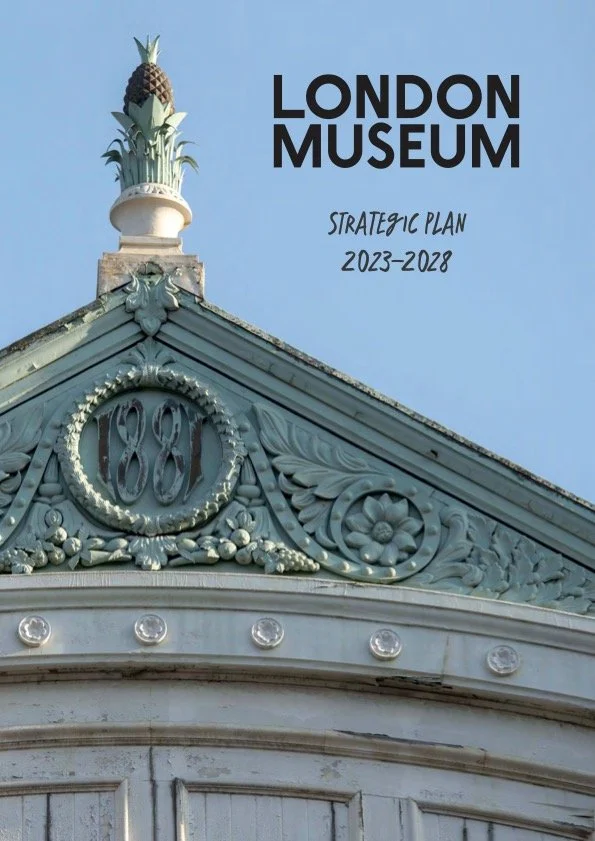
In the spirit of transparency Tangram advised Museum of the Home on the most recent update to its strategy which is due for publication soon. As a member of London Museum’s Executive Team I was heavily involved in the development of its current strategic plan which I subsequently authored as a freelance consultant. Imperial War Museums is a current Tangram client, as are National Museums Liverpool and Tate, via their involvement with Royal Albert Dock Liverpool Ltd.
Observations
Audiences as an output
Nowadays almost all museums have an objective about audiences, visitors, communities or the public. This is a good thing. Something that struck me is that in the strategies I read, audiences are almost always an output rather than an input.
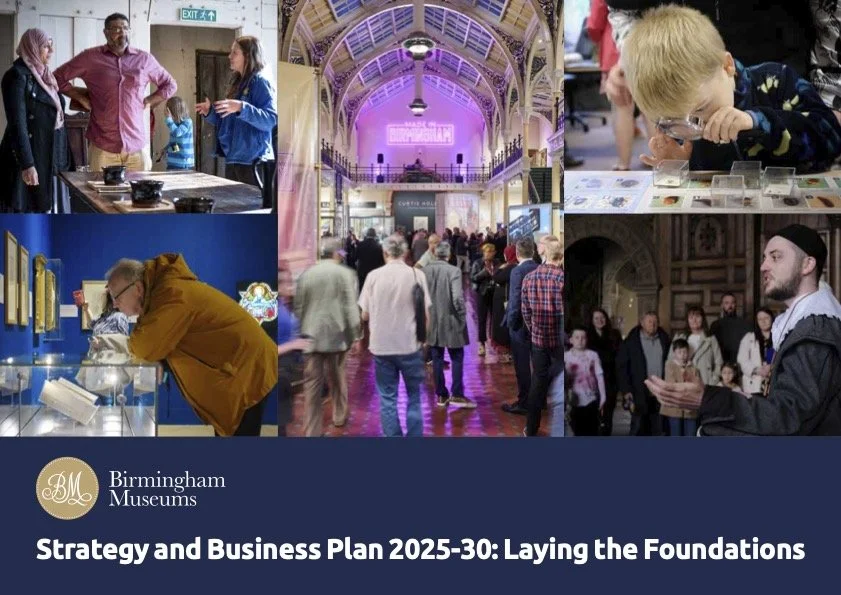
For example Birmingham Museums Trust says that “by 2030 audiences will see Birmingham Museums Trust... creating fun, meaningful, involving experiences for the full diversity of our communities and their uses of our collection and services" Science Museum Group has an audience objective to “build bigger audiences and deeper connections.” Some museums like National Museums Liverpool provide highly detailed visitor and audience metrics including 4.1million visitors by 2030.
However, I saw very little evidence of market intelligence, like visitor and audience research or data, used as an input to define the strategic direction. This observation is specifically but not exclusively about audiences and visitors. This is a counterpoint to detailed understanding of the social and political landscape which features heavily in the preamble of various museum plans. Of course it is possible that museums do use more market intelligence and other data in the formulation of their strategies than is included in the text. I would argue that this is risky. Not only is this a risk to achieving visitor, footfall and sales goals but also to public programming. The absence of market intelligence and audience understanding might mean that exhibitions, events and activities do not meet audience needs and expectations. The alternative would be to spend time gathering market data and insight during the strategy development process so that audience aims and objectives are grounded in evidence and all being well have a greater chance of success.
Strategy timeframes
This exercise got me wondering what’s the optimum length or duration of an organisational strategy or corporate plan?
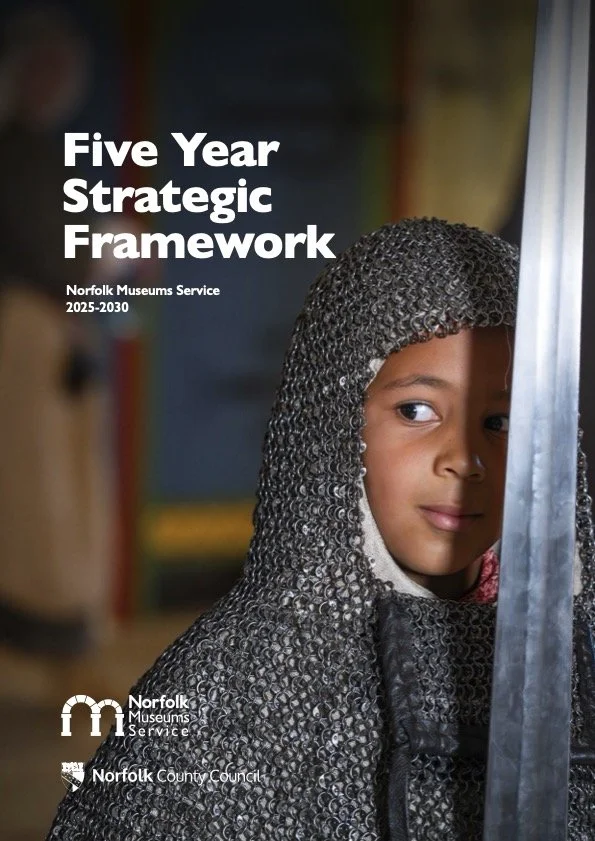
The typical duration for a strategy in the NMDC set is five years. This is true of Birmingham Museums Trust, National Museums Scotland and the National Gallery. Royal Museums Greenwich, The National Archives and National Library of Scotland all have four year strategies. Imperial War Museums, Horniman Museums and Gardens and Derby Museums Trust all operate three year approaches. Three, four or five year strategies and plans are all very typical within and beyond the museum sector.
At the other end of the scale are the British Library’s seven year strategy, Science Museum Group’s eight year approach and Royal Botanic Gardens Kew’s nine year strategy. NPG has a ten-year strategy and National Museums Liverpool operates an 11-year strategy.
The likely reason for long term strategies is to project stability to funders, stakeholders and fundraising prospects. Furthermore, museums are really good at long term thinking. Objects are collected in perpetuity. Capital projects will be designed to last between fifty and a hundred years, maybe more. A permanent gallery or display might be planned with a twenty year lifespan. This mindset will influence strategic planning processes.
Does this type of long term strategic thinking make sense in today’s world which is often characterised as VUCA (volatile, uncertain, complex and ambiguous)? Probably not. Planning with a three to five year horizon in mind might be a better balance complemented with annual or bi-annual updates that can reflect the shifting political and economic landscape as well as changing consumer behaviour. This is likely to be more effective than simply just complementing a long term strategy with annual delivery plans, although in and of themselves annual delivery plans are extremely useful.
What is strategy anyway?
To conclude, let’s spend a few moments thinking about what that word “strategy” actually means and what distinguishes good strategy from bad. You only need to read a few organisational strategies to see how it’s applied very differently by various organisations.
There’s a great episode of The Bottom Line presented by Evan Davis about the necessity of strategy for success. It’s a good, short listen. The quote I come back to again and again from this episode is that strategy is “a set of thoughtful choices that make sense together.”
A.G. Lafley and Roger Martin's “Strategic Choice Cascade” from "Playing to Win: How Strategy Really Works" is worth thinking about too. The strategic choice cascade is a linear process of five strategy questions:
What is your winning aspiration?
Where will you play?
How will you win?
What capabilities must be in place?
What management systems are required?
Playing to Win also identifies six strategy traps or pitfalls, which I try to keep in mind when I’m advising on strategy:
The Do-It-All Strategy (an attempt to be everything for everyone)
The Don Quixote Strategy (strategy divorced from reality)
The Waterloo Strategy (strategy that does not consider the competition)
The Something-for-Everyone Strategy (strategy that attempts to please all stakeholders)
The Dreams-That-Never-Come-True Strategy (lofty but unachievable ambitions)
The Programme-of-the-Month Strategy (lack of consistency over time)
If this piques your interest, I wrote a more in-depth blog about Playing to Win a few months ago. Writing this blog has prompted me to revisit “Good Strategy Bad Strategy: The Difference and Why It Matters” by Richard P. Rumelt and “Emergent Strategy: Shaping Change, Changing Worlds” by Adrienne Maree Brown. I’m adding both to my Easter reading list as well as “Strategy Safari: A Guided Tour Through the Wilds of Strategic Management” by Bruce Ahlstrand and Henry Mintzberg, which I came across while doing some extra research for this post.
Honestly, I love talking about strategy. If you want to chat strategy, please get in touch and let’s talk over a coffee.