
Time-travelling in the City of London
I have always found walking through the City of London comforting.
An advocate for meandering on foot as the best way to get to know a place, my early days working on Culture Mile—the City of London Corporation’s creative placemaking project—were defined by trundling between the project’s various cultural partners. From London Wall and the London Museum, looping down to the Guildhall itself, then through to LSO St. Luke’s over Old Street before coming back for a coffee at Barbican Kitchen: I got my steps in!
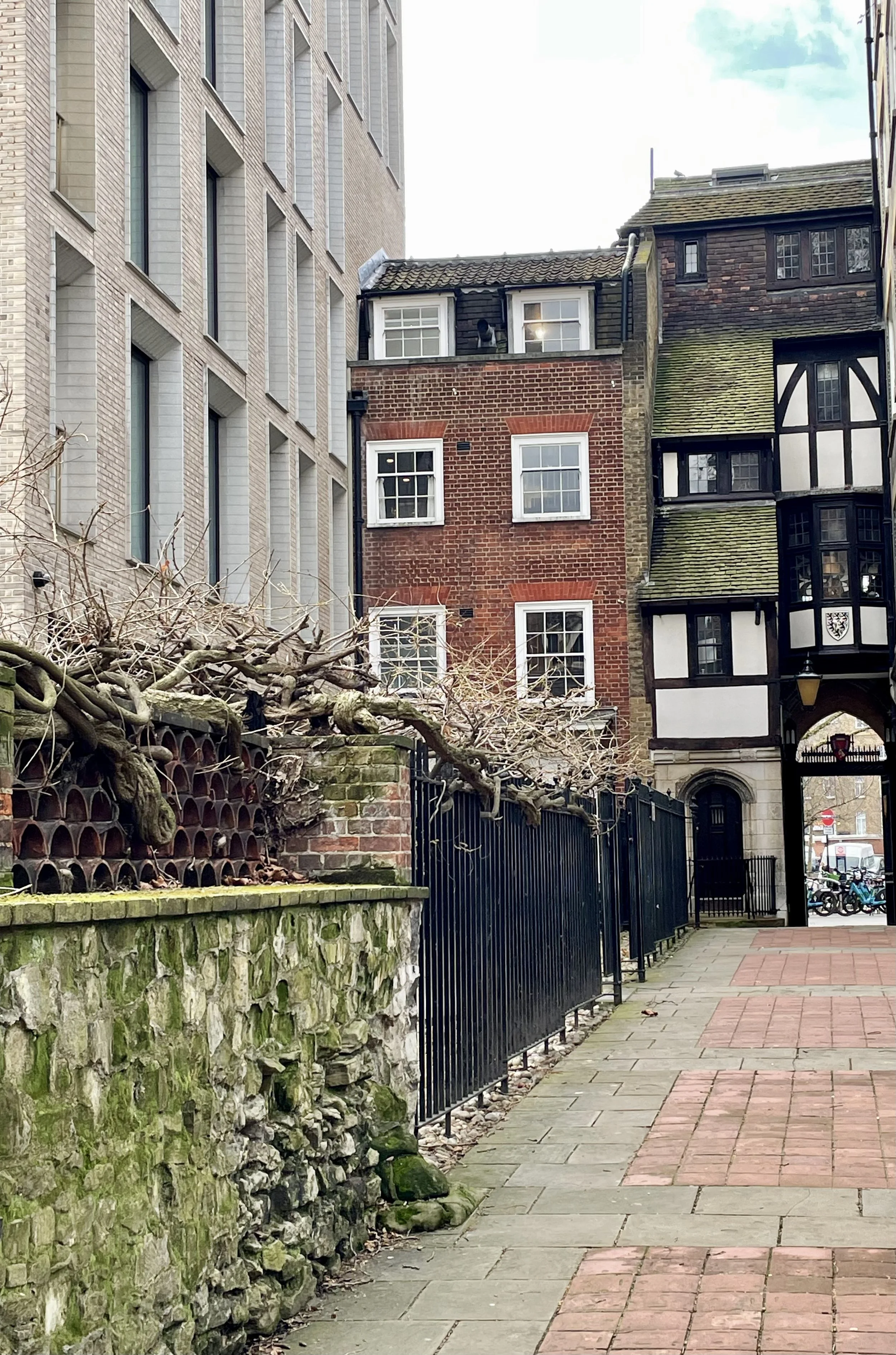
Three architectural strata visible outside of St. Bart’s the Great church
These walks did more than just map out the geography; they shaped my entire understanding of the Square Mile. Each journey seemed to add a new layer of richness to my grasp of the City’s history. With every step, I became more aware of the people who had trodden these same paths centuries before.
From Brutalism to the 16th Century
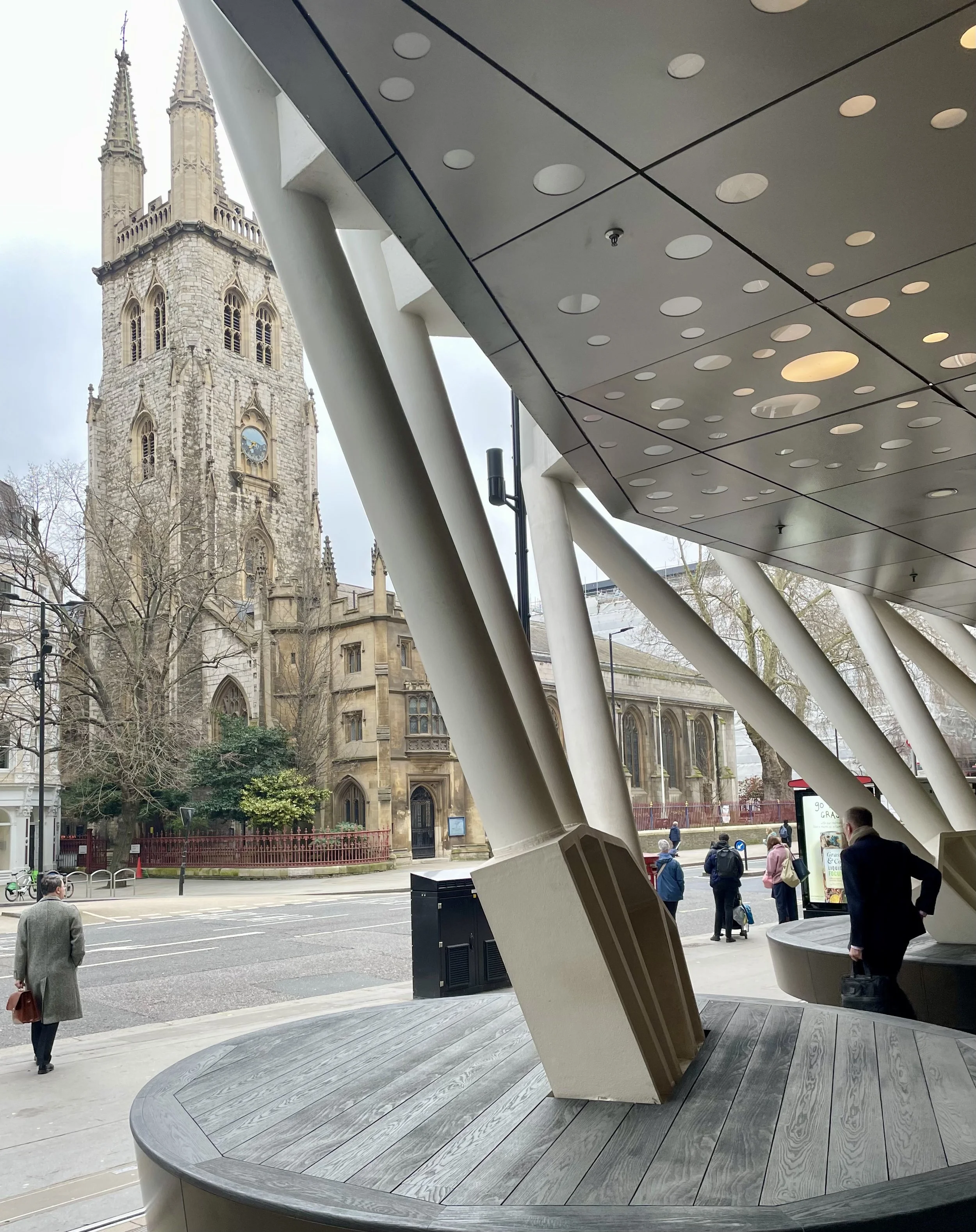
Holy Sepulchre church intersecting with the City Thameslink station’s pergola
Whether I was navigating the Barbican Estate’s "walkways in the sky" or wending through the 16th-century lanes around St Bartholomew the Great, the more I walked, the more I appreciated how the City had been formed over many centuries. On that note, for anyone seeking a contemporary perspective on this layering of identity, I highly recommend Dr Tom Butler’s recent essay, A lost gay space? Recognising LGBTQ+ heritage in a changing sense of place, which focuses specifically on the queer histories of Smithfield.
When I was working on Culture Mile, we always maintained that being a simulacrum of the ancient and the modern was one of the City’s most astounding, defining aspects. The Square Mile is essentially a palimpsest of contrasting histories, squashed together yet visible and, if you make the effort, entirely comprehensible. You can turn a corner and see a 21st-century fintech company towering over a Roman wall, a Victorian meat market cheek by jowl with a classic 90s brasserie or a 12th-century hospital providing sanctuary for an 18th-century artistic masterpiece. The City’s histories are forever bustling together and clamouring for attention.
A day of hopping between eras
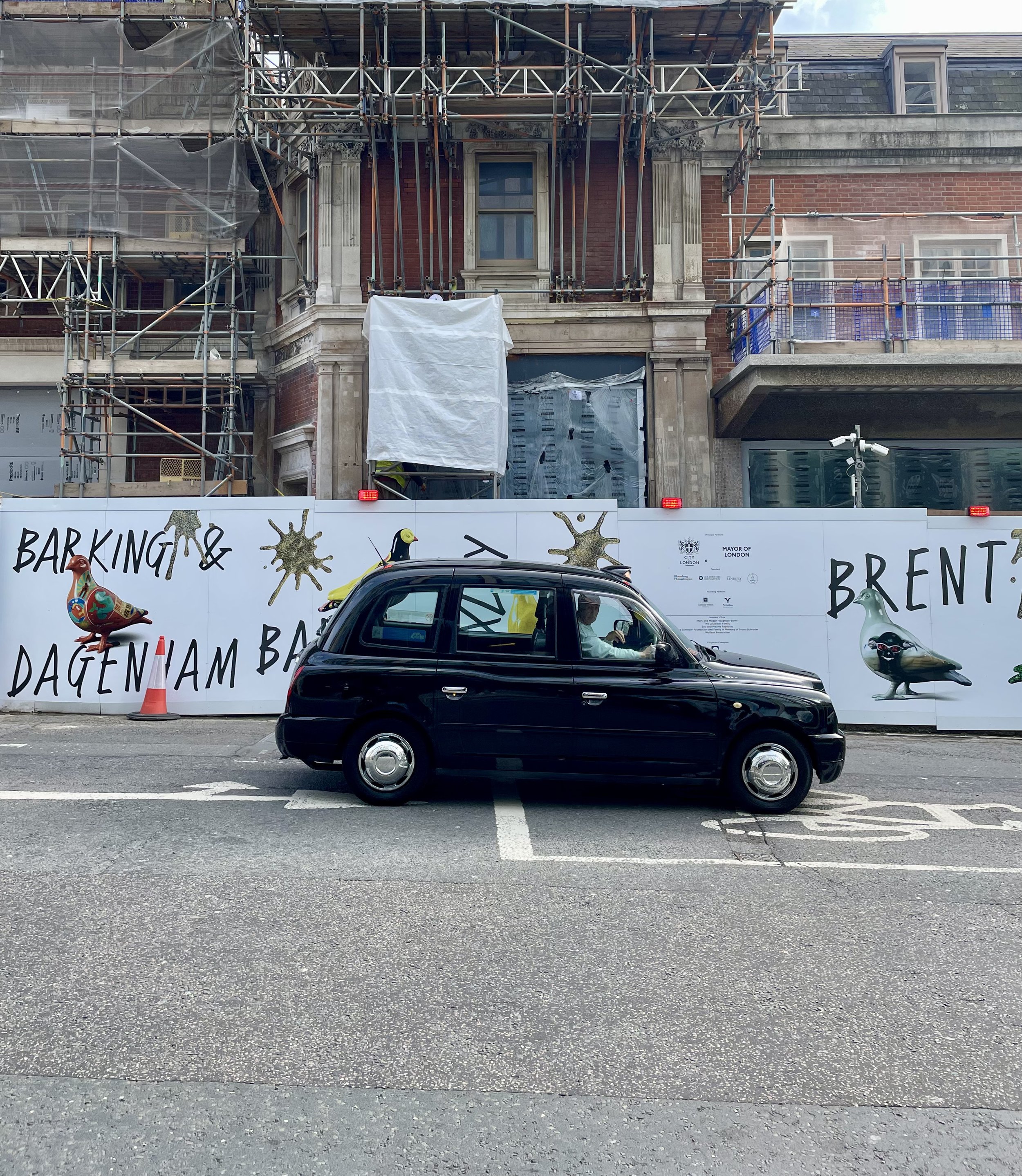
A black cab outside of the new London Museum site in Smithfield.
Returning to the Square Mile a couple of weeks back for a day of wandering and meetings, I noticed that all my conversations kept on reflecting back the idea of ancient and modern.
I heard about the nightclub fabric programming elaborate, pulsating nights in a 17th-century African fortress and the ways in which Holy Sepulchre church is re-engaging City workers with its architectural heritage. I learned about London Museum’s expansive, inclusive new site at Smithfield Market and its pioneering use of AI, alongside the commitments the Barbican is making to transform a Brutalist icon into a sustainable, forward-thinking bellwether for arts institutions worldwide. Every person I spoke to was telling a story that featured some form of metaphorical time travel, hopping between periods and mixing eras.
Keeping your eyes open
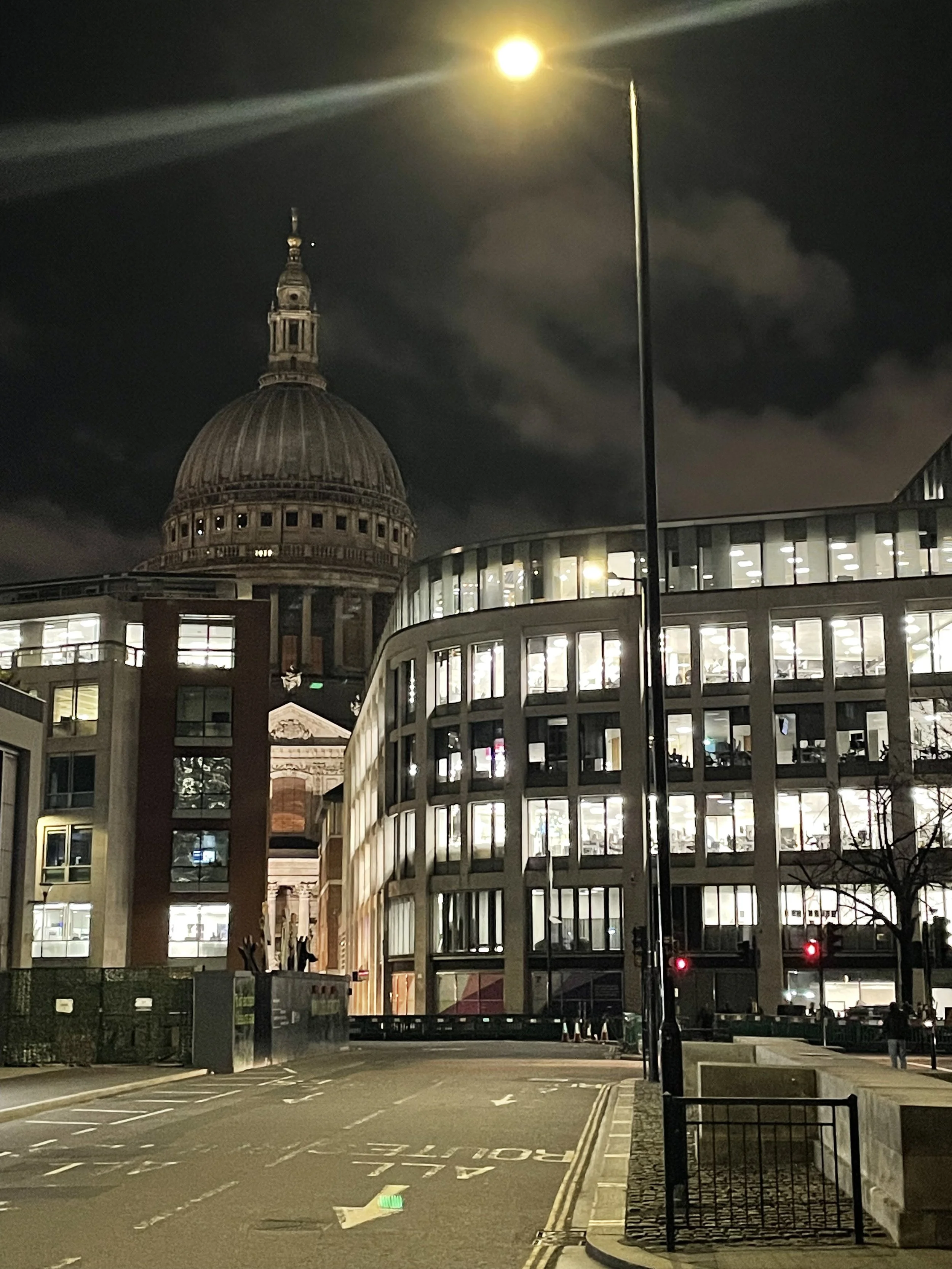
A receding St. Paul’s Cathedral and a brightly lit office block.
I decided to join them.
Inspired by the simple, playful prompts shared by social enterprise 64 Million Artists during their (sadly final) January Creative Challenge, I decided to keep my eyes and ears open for examples of the City’s ancient and modern elements existing side by side—on the street, in the sky, across a roof terrace or through a window.
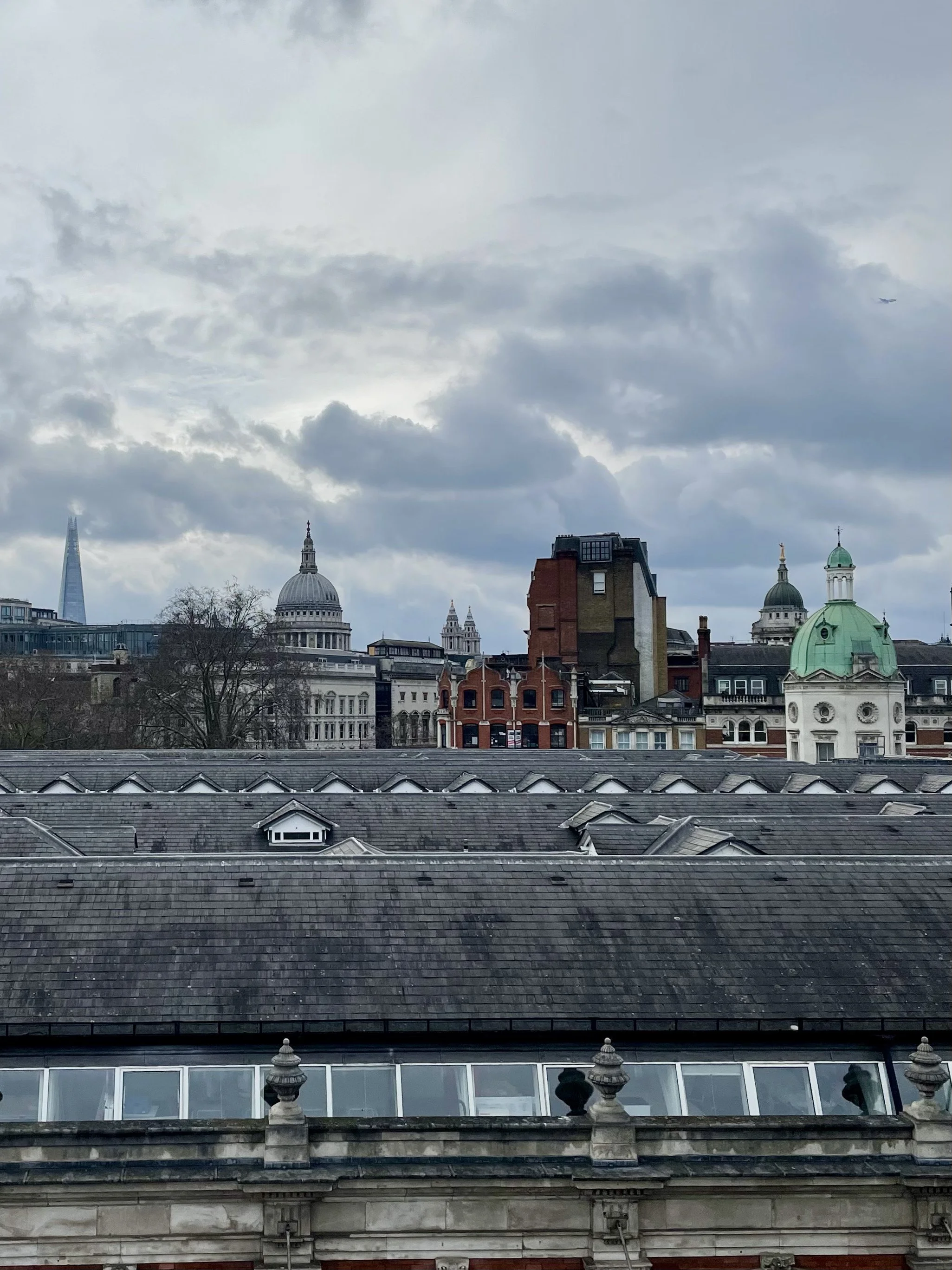
A collection of architectural histories visible from the fabric office’s roof terrace.
These are the views and vistas that show the City of London at its wildly time-hopping finest. A series of photographs that both trace a day of big thinking and capture the small moments of time-travel that accompany my walks in the Square Mile.
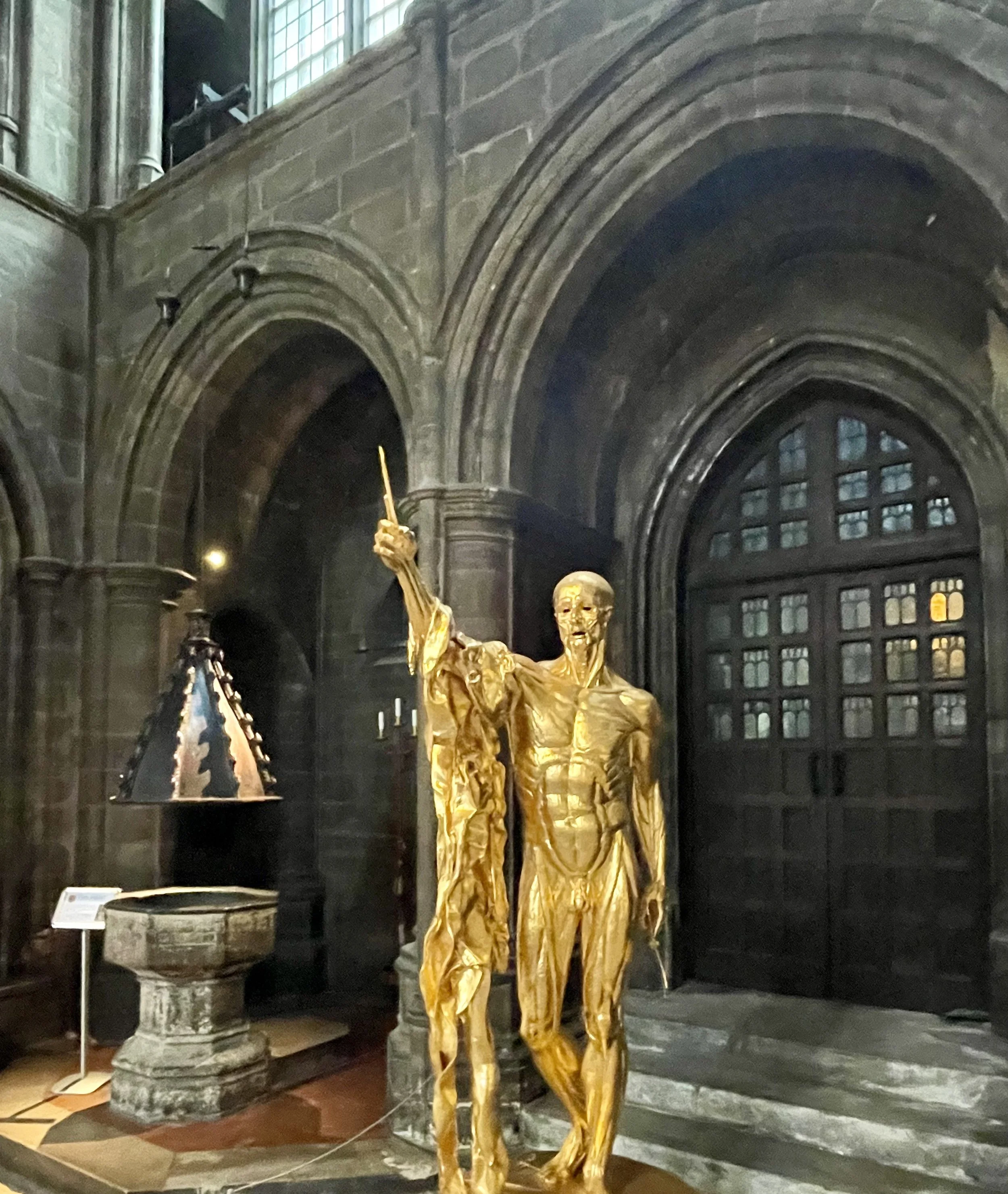
Damien Hirst’s Exquisite Pain at St Bartholomew the Great church