
Lighting the way: Why light is our most overlooked social infrastructure
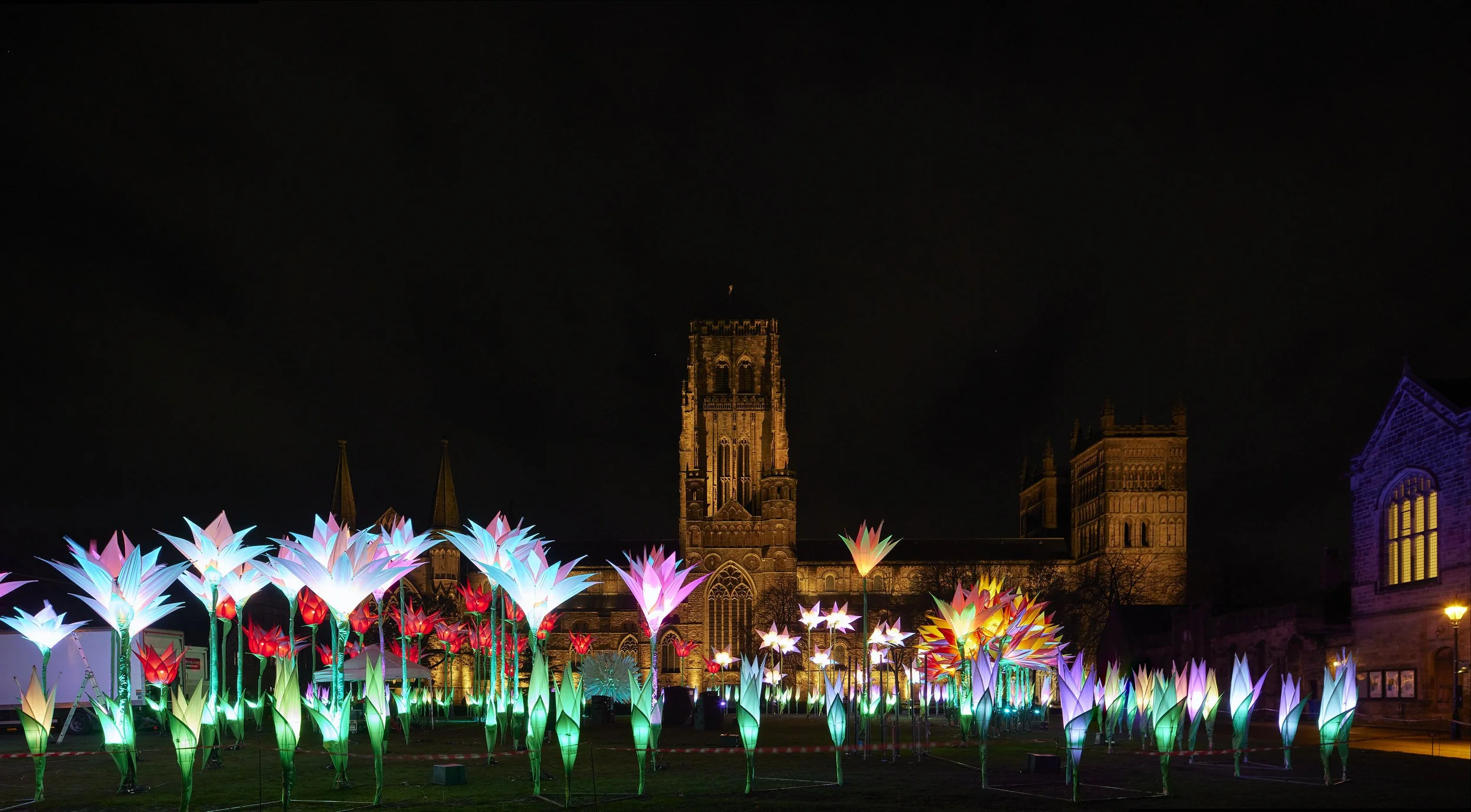
Elysium Garden, Jigantics. Lumiere Durham 2025, produced by Artichoke. © Matthew Andrews
The nights are drawing in and the weather’s getting worse. At this point in the year we search for any source of light and warmth, so it feels right that towns and cities across the UK begin to glow. Whether it’s the spectacle of the Blackpool Illuminations or the modest Christmas lights strung through local streets, we turn to these sparks of brightness for the simple reason that light makes the weight of winter a little easier to bear.
Light then also becomes a potent form of social infrastructure. We often think of infrastructure as roads or transport, yet if we look at a city through the lens of human experience rather than pure function, light becomes something much bigger. It’s not only a tool to push back the dark, it shapes how we gather, how we feel and how we recognise ourselves as part of a shared place.
I have spent my career working in destinations across the country and I’ve seen with festivals like Winterfest at Wembley Park and Lumiere in Durham that light is never just functional, it is one of the most effective ways to bring people together.
The social power of light is most obvious during light festivals, with Lumiere Durham a clear example. Looking at the impact of Durham’s Lumiere festival, we see a clear case study in emotional placemaking. Helen Marriage, Artistic Director of Artichoke, who produced Lumiere, in The Guardian described the festival as not just an art exhibition but as a "beacon of hope and togetherness".
In the dark, cold months, traditionally a time of hibernation and isolation, light festivals act as a counter-narrative. They encourage people out of their homes to take part in a shared experience. Anyone who has been to Lumiere will know the feeling of the "collective gasp", that moment of shared awe when a crowd stands still, caught by the same sense of wonder. As the Guardian piece highlights, while we can measure the economic impact (£43m for Durham), we can’t easily measure the feeling of standing in a crowd, moved by a shared experience. This is light acting as a social glue, turning strangers into a community, if only for an evening.
There is nothing quite like Lumiere Durham. Having worked on this year’s final edition I can attest, the production level was remarkable. I had a tour of this year’s biennial in the rain and cold, two of my least favourite types of weather, yet every installation lifted my mood. They were beautiful and thoughtful and created an amazing atmosphere. They encouraged people to come out in huge numbers (120,000 people) to see work from local emerging talent and international artists. They transformed a historic city and its Cathedral after dark and created a platform for emerging talent across the region.
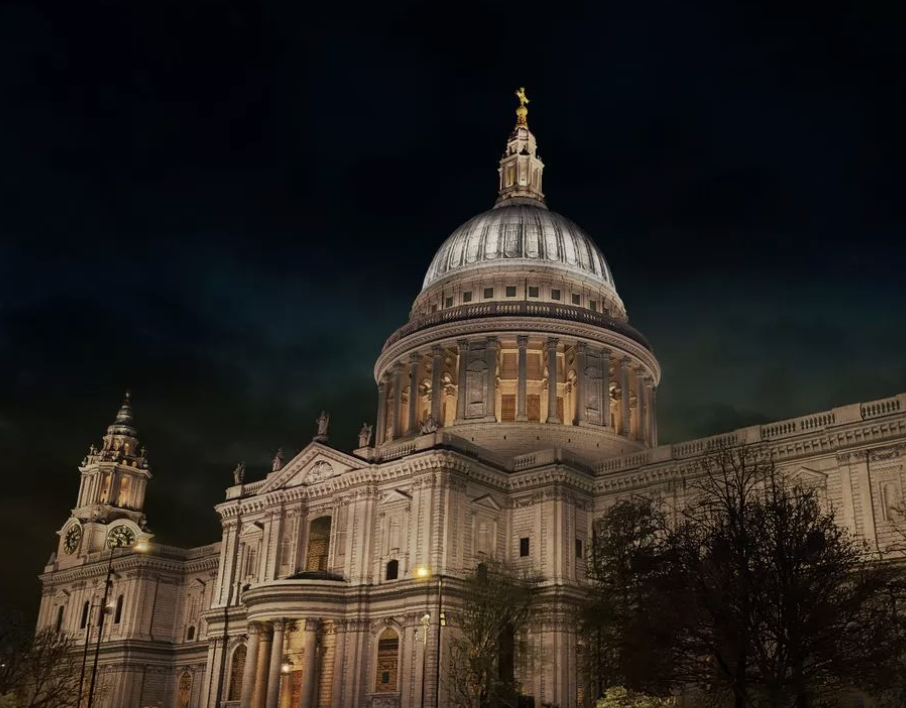
St. Paul’s Cathedral, London.
Whilst festivals give us the spark and temporarily bring light and community to our streets and public spaces, the real challenge is how to bring that feeling into the permanent fabric of our cities. Our work with the City of London and St Paul’s Cathedral, looking at the social value of a possible new lighting scheme for this iconic building, has shown just how important lighting is in our everyday lives.
There is a strong emotional connection to the night-time view of St. Paul's. Our research showed that people see it as a constant in the skyline. It offers a sense of comfort and continuity. People feel protective of it and call it “our St. Paul’s”, it stands for resilience and heritage.
That emotional investment means any change can feel unsettling if it shifts the familiar too quickly. The challenge for the landmark is how to evolve its lighting in a way that keeps this emotional connection intact and strengthens it.
Thinking of the emotion both Lumiere and St Paul’s Cathedral evoke, it’s clear that light has the power to create compelling connections. Whether it is the joy of Lumiere or the steady presence of St Paul’s, light is never neutral, instead it plays an active role in our social lives.
When we treat lighting as a central part of our public spaces, we shape the way our cities feel after dark. We influence how welcome they are and how connected we feel within them. Lighting is more than equipment, it’s a form of social infrastructure that helps people feel they belong, setting the mood, affecting how we come together and quietly shapes who we are after the sun goes down.
